The Black Keys: Two Kids From Akron and a Basement Full of Blues
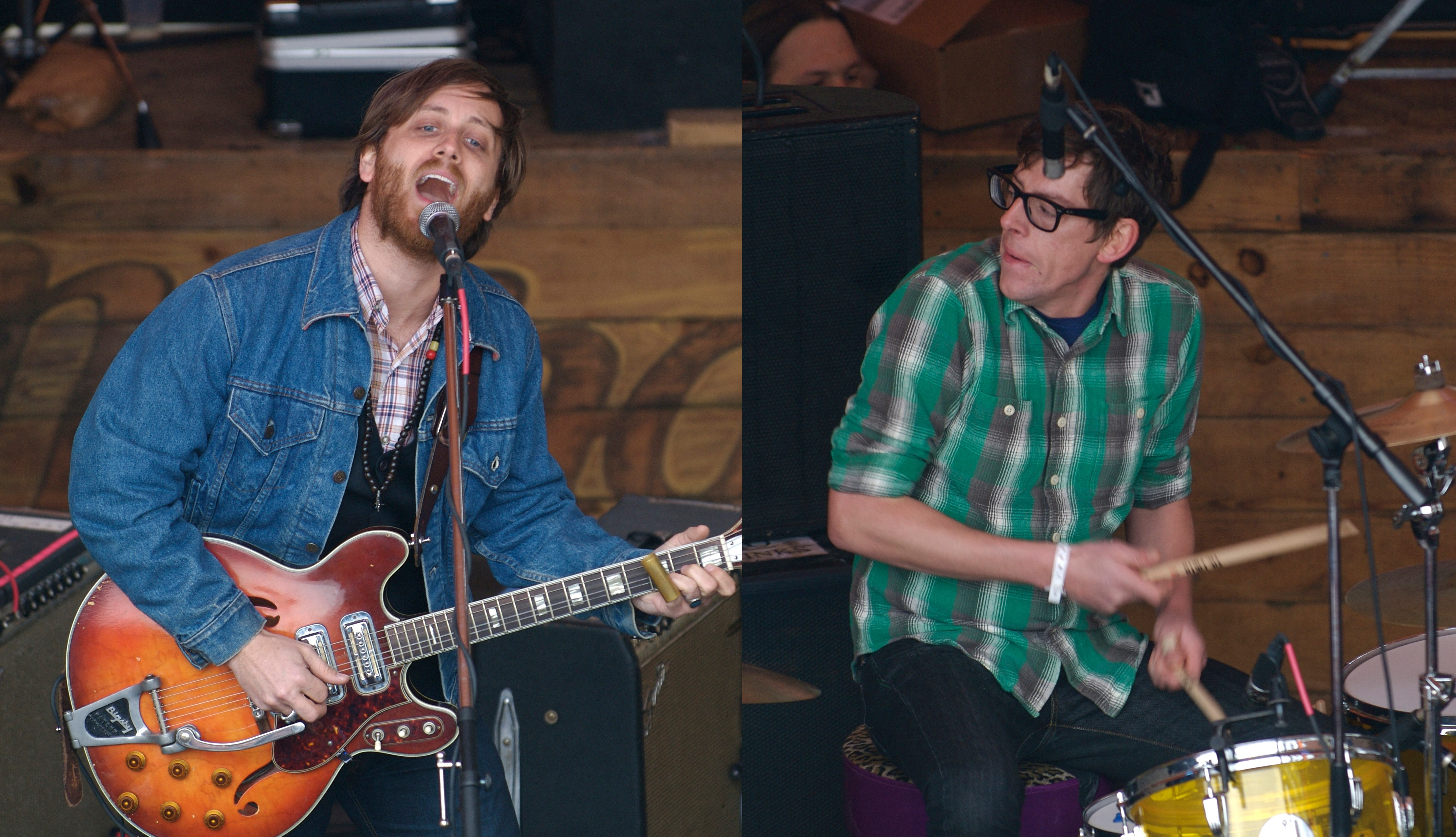
Photo: Kara Murphy / Wikimedia Commons, CC BY 2.0 (https://creativecommons.org/licenses/by/2.0/). Source: https://commons.wikimedia.org/wiki/File:Black-keys-sxsw-montage.jpg
Before the Grammys and the arena tours, the Black Keys were two kids from the same street in Akron, Ohio. According to Wikipedia, Dan Auerbach and Patrick Carney first met at nine, living a couple of houses apart. They became an independent act recording in basements and producing their own records, and ended up among the most popular bands of the 2000s garage-rock revival. The duo has 10,560 plays on U-Rock®.
Different crowds, same basement
Wikipedia says both came from musical families. Auerbach is a cousin of guitarist Robert Quine, and Carney is the nephew of saxophonist Ralph Carney, who played on several Tom Waits albums. At Firestone High School they ran in different circles: Auerbach was captain of the soccer team, while Carney was a social outcast. Encouraged by their brothers, they started jamming in 1996. Auerbach was learning guitar, and Carney had a drum kit and a four-track recorder. Both briefly attended the University of Akron and dropped out.
The band itself started by accident. Auerbach needed a demo to book gigs outside town, Wikipedia says, and Carney offered his basement and recording gear if Auerbach brought the other musicians. None of the backing band turned up. Carney and Auerbach jammed on their own instead, and the Black Keys were born.
That jam turned into a six-song demo of what the band called "old blues rip-offs and words made up on the spot." FLOOD and Rolling Stone both say the demo went out to labels and reached Alive. Wikipedia says they sent it to a dozen labels and took the offer from Alive, a small Los Angeles label, because it was "the only label that would sign [them] without having to see [them] first." Cleveland Scene dates their first show to 31 March 2002 at Cleveland's Beachland Tavern, and FLOOD says they played for fewer than 20 people. The name came from Alfred McMoore, a self-taught Akron artist with schizophrenia whom both their fathers looked after. FLOOD describes his frequent answering-machine messages and quotes one: "If you don't bring me pipe tobacco, you're a black key, you're a D flat." To pay for touring, Wikipedia adds, the pair mowed lawns for a landlord, and the second album, Thickfreakness, was recorded in a single 14-hour session in Carney's basement because the advance had gone on rent.
The blues, played raw
Wikipedia describes their sound as raw blues rock drawn from Auerbach's heroes: Junior Kimbrough, R.L. Burnside, Howlin' Wolf and Robert Johnson. After signing with the independent label Alive, they released the debut The Big Come Up in 2002, which led to a deal with Fat Possum Records. Over the next decade they built an underground following through relentless club touring, frequent releases, festival slots and widespread licensing of their songs.
The third album, Rubber Factory (2004), won critical acclaim and raised their profile, and in 2006 they signed with Nonesuch Records. After four records made in makeshift studios, they recorded Attack & Release (2008) in a professional studio with producer Danger Mouse, who became a frequent collaborator.
Brothers, El Camino and the arenas
The commercial breakthrough came with 2010's Brothers, Wikipedia says. The album and its single "Tighten Up" won three Grammy Awards. El Camino (2011) reached No. 2 on the Billboard 200 and led to the band's first arena tour. It and its single "Lonely Boy" won three more Grammys. Turn Blue (2014) was their first No. 1 album in the US, Canada and Australia. After that tour the duo took several years off for side projects and producing other artists.
Back to the source
They returned in 2019 with Let's Rock. In 2021 came Delta Kream, a tribute to Mississippi hill country blues that took them back to the music that started it all. Wikipedia lists Dropout Boogie (2022), Ohio Players (2024), No Rain, No Flowers (August 2025) and Peaches! (2026).
Why it matters on U-Rock®
The Black Keys began the way so many U-Rock® bands do: friends, a basement, a cheap recorder and a band that didn't show up. They went all the way to arenas without losing the raw blues at the core. With 10,560 plays, they're in heavy rotation here.
U-Rock® play data: 10,560 plays logged across the BROADCAST and CORE histories (2026-07-02 to 2026-10-12), using the higher of the two logs.
Sources 1. Wikipedia, "The Black Keys" — https://en.wikipedia.org/wiki/The_Black_Keys 2. U-Rock® BROADCAST (AzuraCast) and CORE (airplay_spins) play logs 3. Akron Beacon Journal, "How did the Black Keys get their name?" (2025) — https://www.beaconjournal.com/story/news/2025/04/21/why-are-they-called-the-black-keys/83163077007/ 4. FLOOD, "20 Years After 'The Big Come Up'" — https://floodmagazine.com/108722/the-black-keys-big-come-up-anniversary-feature/ 5. Cleveland Scene, "Black Keys to release live album recorded at Beachland in 2002" — https://www.clevescene.com/music/black-keys-to-release-live-album-recorded-at-beachland-in-2002-40785153/ 6. Rolling Stone, "Watch the Black Keys relive the accidental jam that launched the band" — https://www.rollingstone.com/music/music-news/watch-the-black-keys-relive-the-accidental-jam-that-launched-the-band-159113/