Buying and selling used gear without getting burned
Used gear is often the best value in audio—and one of the easiest places to lose money. The difference between a bargain and somebody else’s problem is a disciplined inspection.
Before You Go
Look up the exact brand and model, not merely something similar. Compare actual sold prices, account for condition and missing accessories, and ask the seller whether the unit can be demonstrated. Bring music you know well, the correct cables or adapters, and headphones when appropriate.
If powered gear cannot be demonstrated, treat it as untested and price it as though it may need repair. “It worked the last time I used it” is not a test result.
The Ten-Minute Buying Test
Whenever possible, begin with a cold start. Run the equipment for at least ten full minutes—intermittent faults often hide from thirty-second demonstrations.
- Test both channels with a source you brought yourself.
- Work every knob, switch, input, output and meter.
- Listen for hum, crackling, distortion and channel dropouts.
- Watch for protection-mode cycling, excessive heat or unexpected shutdowns.
- Inspect the case, corners, screws and connectors for drop damage, corrosion or careless repairs.
- Check the vents for a burnt-electronics odor. Burnt is either repair-price territory or a walk-away.
Do not open a powered unit or touch anything inside it. Vintage amplifiers—especially tube equipment—can retain dangerous voltage even after being unplugged. Gear that has sat unused for years may need professional inspection before anybody powers it up.
The Five-Minute Rules by Category
Receivers and amplifiers: Test every input, both speaker channels, the headphone output, balance and tone controls. Listen for hum, weak channels, relay problems and distortion as the unit warms. Scratchy controls may only need cleaning, but never assume that is the whole problem—use it to negotiate.
Turntables: Check platter wobble, speed stability, motor noise, cueing action and unwanted movement in the tonearm bearings. Listen for grounding hum. Unless the seller can document the cartridge and stylus condition, budget for a new stylus.
Speakers: Inspect foam or rubber surrounds, cones, cabinets and terminals. Water-swollen cabinet edges are a serious warning. At low volume, confirm that every woofer and tweeter is producing sound. Then use a familiar bass-heavy track at moderate volume and listen for buzzing, scraping or cabinet rattle. Do not press on dust caps or tweeters.
Tape decks: Test play, stop, pause, fast-forward, rewind and recording if possible. Belts, pinch rollers and idlers deteriorate with age. Without a recent service receipt, assume the transport needs work and price it accordingly.
Mixers, interfaces and powered monitors: Test every input and output you expect to use, including headphone feeds, gain controls, meters and phantom power where applicable. For digital equipment, verify current operating-system and driver support before handing over money. Perfect hardware can still be useless if modern software no longer recognizes it.
Microphones: Use a known-good cable and listen through a familiar mixer or interface. Speak across the microphone at normal volume and test every pad, filter or pattern switch. Do not “test” a microphone by striking or tapping the grille.
Selling Without the Doorstep Argument
Honesty is a sales tactic. Photograph flaws deliberately, show the serial number, describe every known fault and provide a short operating video when practical. A buyer who arrives already knowing about the scratch cannot suddenly discover it as a reason to cut the price.
Price against completed sales, not optimistic asking prices. Clean the equipment carefully, but do not soak controls, scrub faceplate lettering or use aggressive chemicals. Dust and nicotine residue cost sellers real money.
A simple receipt should identify the equipment, serial number, sale price, date and any disclosed defects. Both sides leave knowing exactly what changed hands.
Meeting Strangers
Meet during daylight and use a public exchange location when the gear is portable. For large equipment that must be demonstrated inside a home or studio, bring another person and tell someone where you are.
Use cash or a payment you can confirm inside your own banking or payment app. Never trust screenshots, emailed confirmations, overpayments, surprise couriers or complicated refund stories. Every complicated payment story eventually becomes the same story.
Estate Sales and Local Finds
Estate sales are the deep water. Arrive early for audio gear, learn to recognize desirable silver-face receivers on sight, and always check the garage, basement and back room—the good equipment was often banished there decades ago.
Bring a flashlight, headphones and a small bag of known-good cables, but ask permission before connecting or powering anything. If old equipment cannot be safely tested, buy it only at an untested price.
Local listings and the independent dealers in your U-ROCK® station guide usually beat gambling on shipping heavy, fragile equipment. You can hear the gear, inspect it yourself and keep the money circulating in the local music community.
Market-price reference: Reverb Price Guide
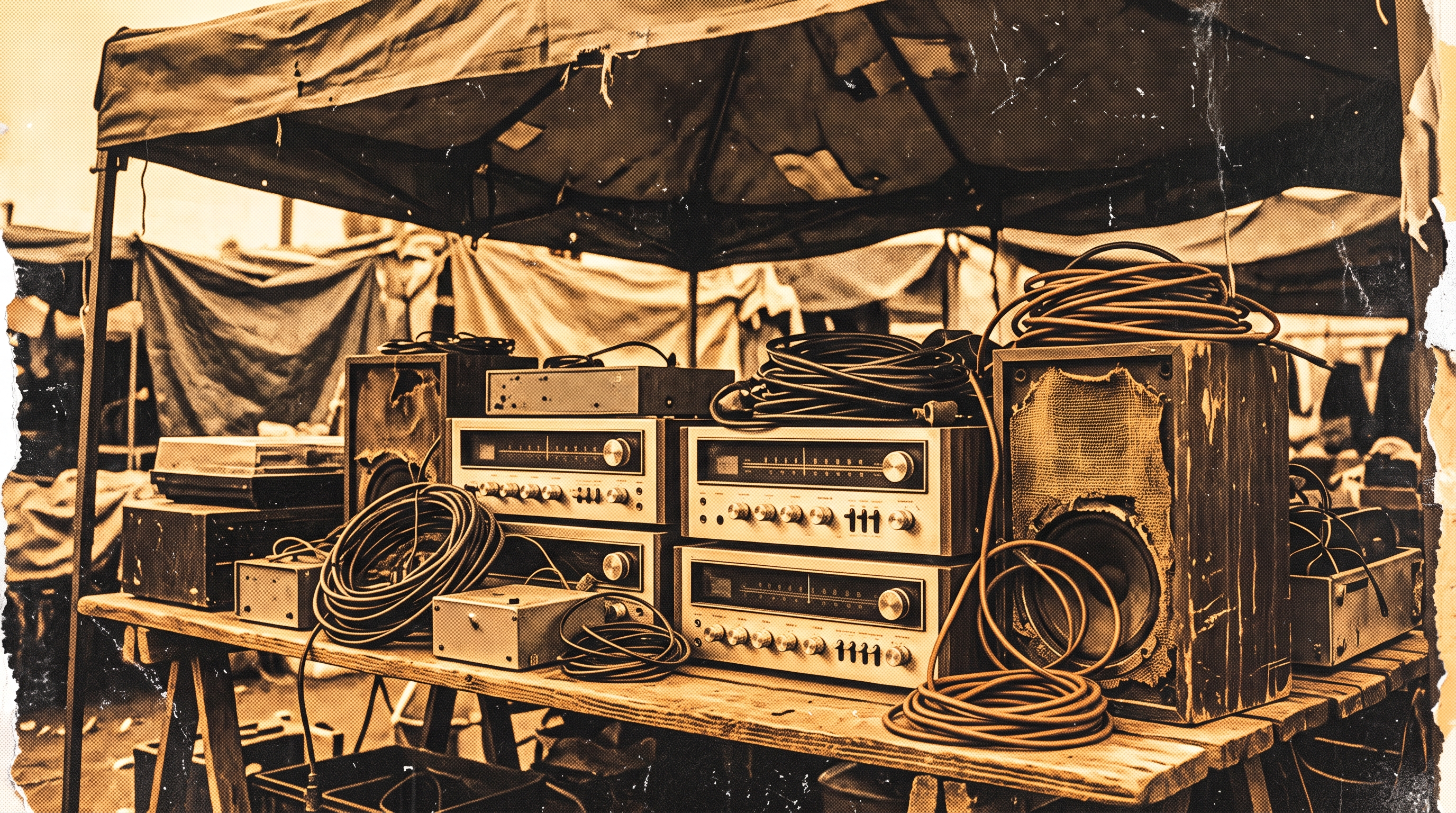
Illustration: U-ROCK® house art
